15 Best U.S. Contractor Website Examples That Win More Clients (2026)
Explore 15 contractor website examples and see how U.S. construction companies use strong design, trust signals, project photos, SEO, and CTAs to win leads.
A contractor can do exceptional work and still lose the lead before the homeowner ever makes a call.
Why?
Because prospective customers often see your website before they see your craftsmanship.
They may compare several contractors in minutes—looking at project photos, services, reviews, service areas, credentials, and how easy it is to request an estimate. If your website feels outdated, confusing, or difficult to trust, your company can lose consideration before you ever get the opportunity to speak with the customer.
That is why the best contractor websites do more than look professional. They help visitors quickly answer four questions:
- What does this contractor do?
- Do they serve my area?
- Can I trust them with my project?
- What should I do next?
Below are 15 contractor website examples created around different U.S. construction and home-service industries. Rather than focusing only on visual design, we’ll break down the conversion ideas contractors can learn from each example.
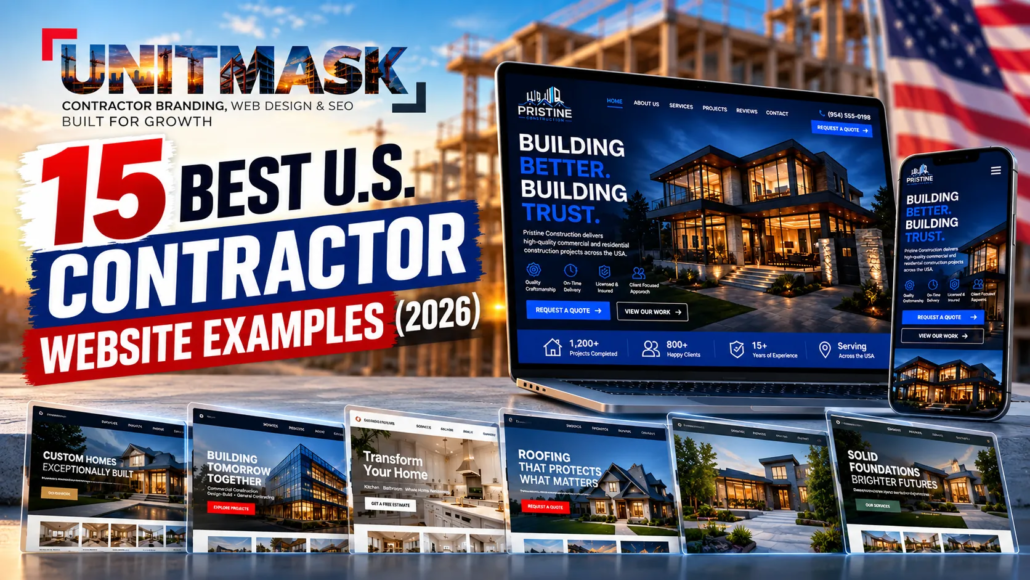
Why Great Contractor Websites Matter
A contractor website sits between discovery and the sales conversation.
A homeowner might find the company through Google Search, Google Maps, a referral, social media, a yard sign, or a truck. The website is often where that person decides whether the company deserves the next step.
Strong contractor websites usually make several things immediately clear:
Services. Visitors should understand what type of work the company performs without digging through the site.
Location. A contractor serving Dallas should not make a visitor search multiple pages to discover that.
Proof. Real projects, reviews, credentials, years of experience, warranties, licensing information where appropriate, and recognizable trust signals reduce uncertainty.
Next step. Request an estimate, schedule a consultation, call the company, or submit project details.
This is also why your website should work together with SEO rather than function as a standalone online brochure.
For U.S. contractors, investing in professional contractor website design helps turn online visitors into qualified leads through clear service messaging, strong trust signals, and easy estimate requests.
15 Best Contractor Website Examples
1. Luxury Home Builder Website
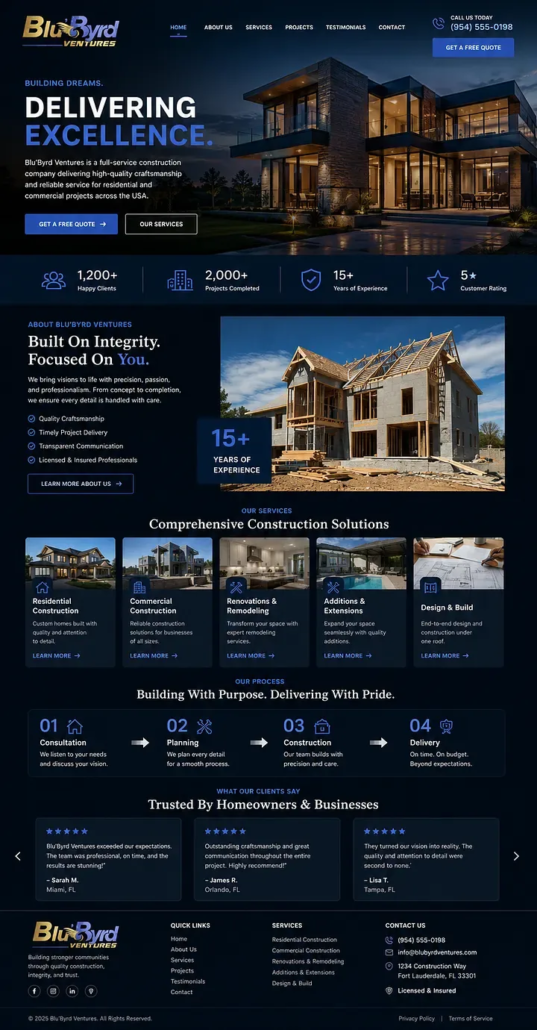
Perfect for: Custom home builders, luxury residential contractors, and design-build firms.
Why This Website Style Works
Luxury construction buyers are not simply purchasing square footage. They are evaluating craftsmanship, design capability, attention to detail, and whether the builder appears capable of managing a high-value project.
That means the website should allow premium project photography to lead the experience while keeping the message concise.
What Contractors Can Learn
Use large finished-project photography, show your strongest homes early, explain your building process, establish the geographic markets you serve, and give serious prospects a clear consultation path.
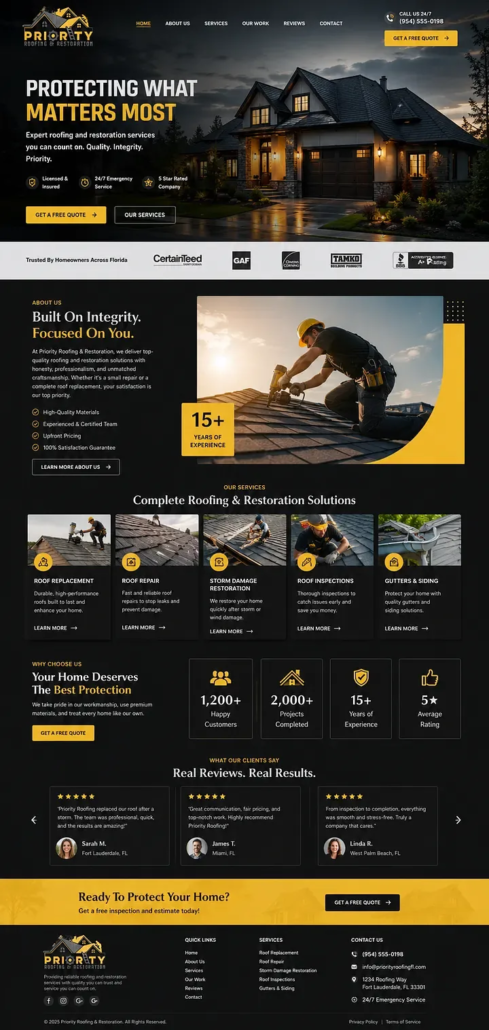
2. Roofing Contractor Website
Perfect for: Residential roofers, storm-restoration contractors, and roofing companies.
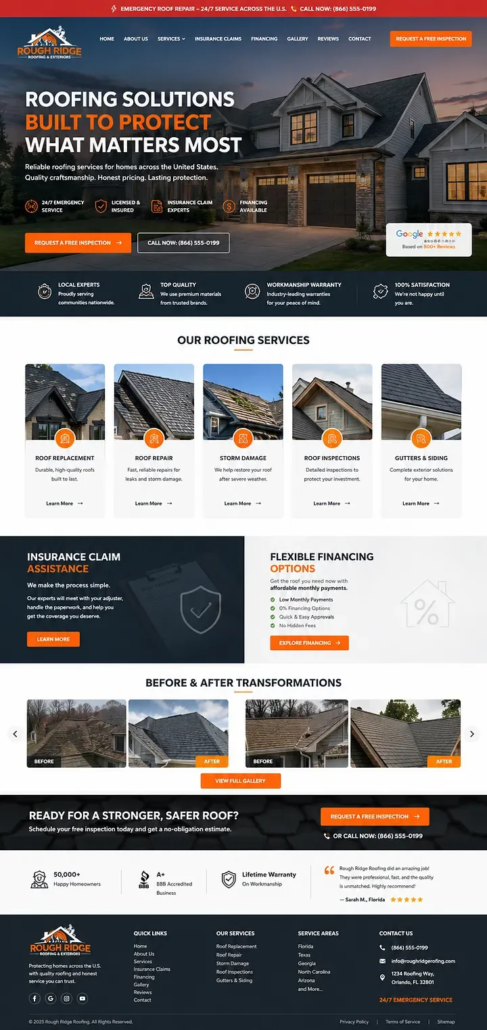
A roofing visitor may arrive with much greater urgency than a custom-home buyer. Storm damage, leaks, aging shingles, insurance questions, and repair concerns can all create immediate intent.
The design therefore needs to make services and the next action obvious.
What works: prominent inspection/estimate CTA, recognizable roofing services, trust credentials, reviews, warranty information and clear service areas.
For roofing contractors looking to attract more local homeowners, a strong Roofing SEO strategy can improve Google visibility, strengthen local search rankings, and generate more qualified roofing leads.
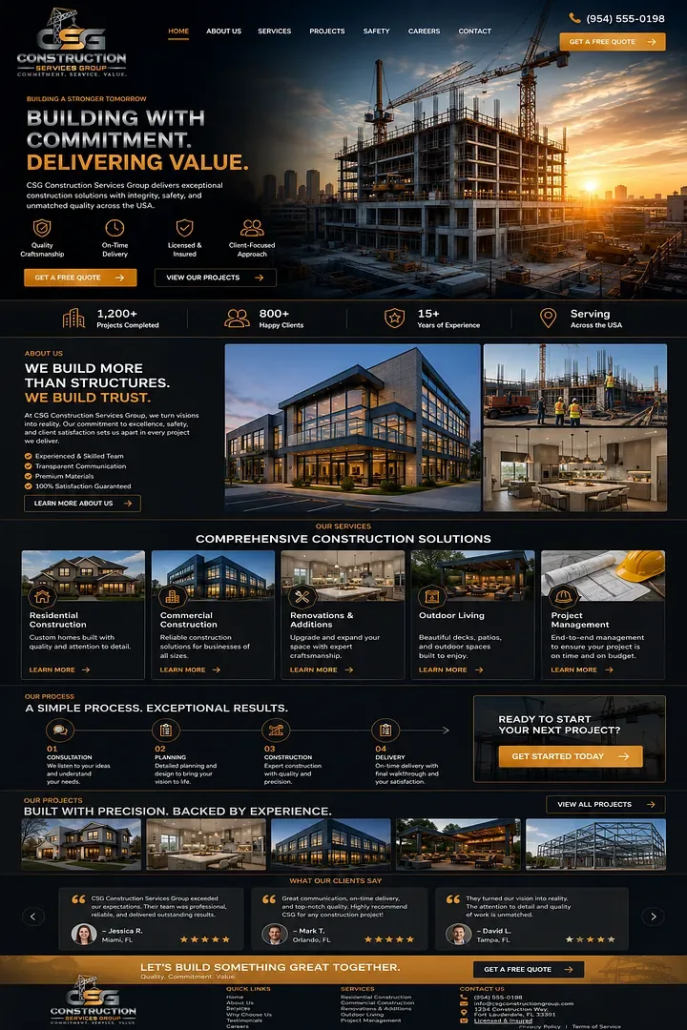
3. Commercial Construction Website
Perfect for: Commercial contractors, general contractors, and construction management firms.
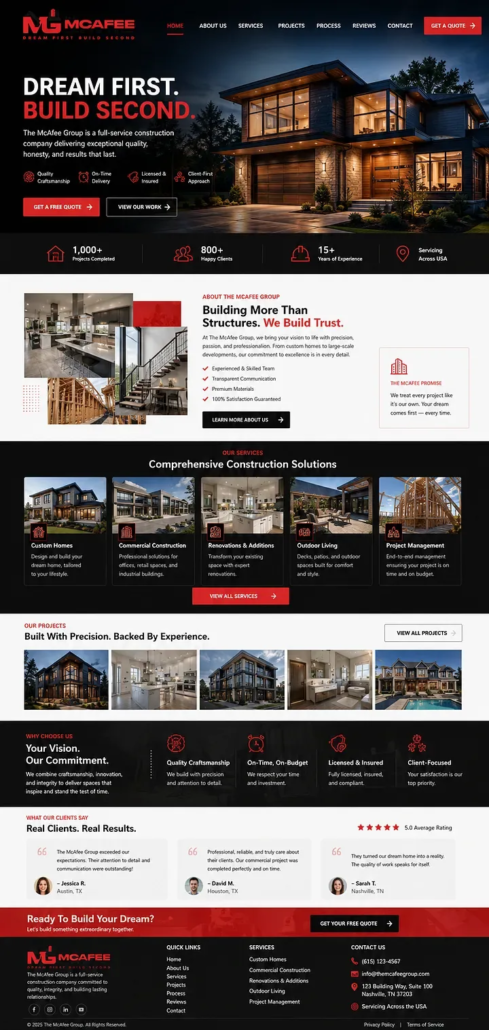
Commercial buyers need evidence that the contractor can handle scope, schedules, safety requirements and complex projects.
Project portfolios therefore matter more than decorative design. Use project categories, relevant capabilities, company experience and a clear path for prospective clients to discuss a project.
Not Sure Where Your Website Is Losing Leads?
Get a contractor-focused review of your website’s mobile experience, trust signals, service structure and lead path before deciding whether you need a full redesign.
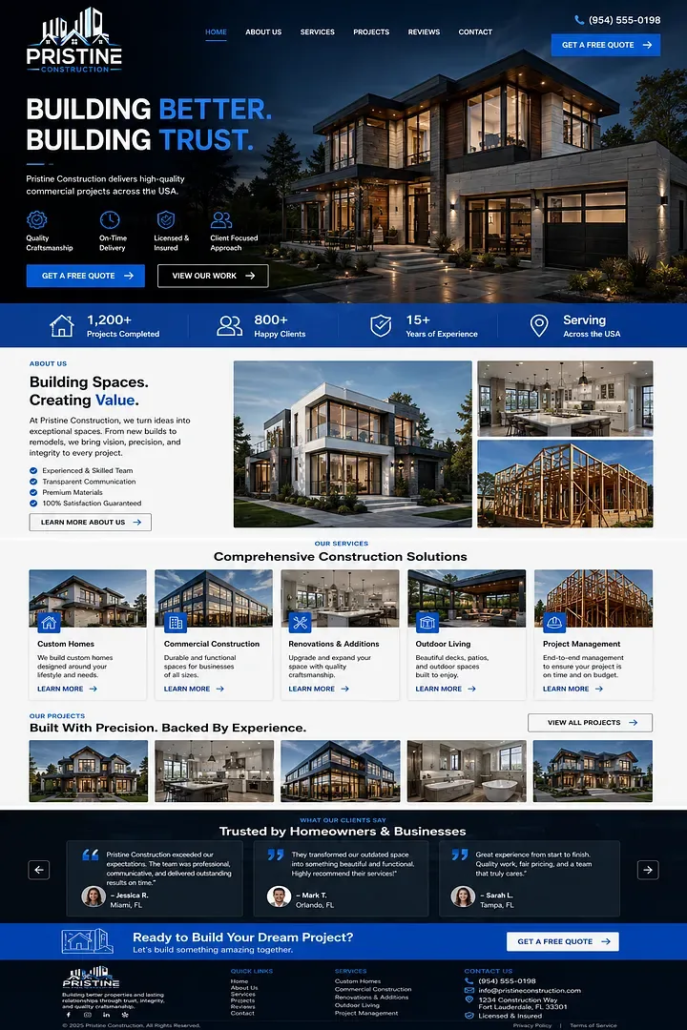
4. Remodeling Contractor Website
Perfect for: Home remodelers, renovation companies, kitchen and bathroom contractors.
Remodeling is visual. Homeowners want to imagine what their own property could become.
Before-and-after work, kitchens, bathrooms, additions and completed living spaces can therefore do much of the selling.
Pair those visuals with reviews, a straightforward process and service-area information.
5. Concrete Contractor Website
Perfect for: Concrete, foundation, flatwork and specialty concrete companies.
Here the website needs to remove ambiguity. Visitors should quickly see whether the company handles driveways, foundations, patios, slabs, commercial concrete or other specific work.
Strong project photography and service-specific pages help both users and search engines understand the business.
6. HVAC Contractor Website
Perfect for: HVAC contractors, heating and cooling companies, air conditioning repair specialists, and residential or commercial HVAC service providers.
Why This Website Style Works
When a homeowner’s air conditioner stops working during a Texas summer or their heating system fails in the middle of winter, they are not interested in browsing a complicated website.
They want to know three things immediately: Does this company handle my problem? Do they serve my location? How quickly can I contact them?
An effective HVAC contractor website prioritizes clarity, accessibility, and trust. It organizes heating, cooling, maintenance, and installation services into recognizable categories while keeping phone numbers and appointment requests easy to find.
For companies offering emergency repairs, prominent emergency contact information can help customers take action without navigating multiple pages.
What Contractors Can Learn
-
Display a prominent Schedule Service or Request an Estimate button.
-
Create dedicated pages for AC repair, furnace installation, HVAC maintenance, and system replacement.
-
Highlight service areas, relevant certifications, customer reviews, and available financing options.
-
Make emergency service information visible when that service is genuinely offered.
-
Optimize mobile navigation for customers searching from their phones.
HVAC websites should make it easy for customers to identify their problem, confirm service availability, and request help.
7. Plumbing Contractor Website
Perfect for: Residential plumbers, commercial plumbing contractors, drain cleaning specialists, and emergency plumbing companies.
Why This Website Style Works
Plumbing customers often search because something needs immediate attention—a leaking pipe, clogged drain, water heater failure, or sewer line issue.
Unlike homeowners researching a future remodeling project, these visitors may be ready to contact a plumber within minutes.
A well-structured plumbing website reduces uncertainty by displaying essential services, contact options, service locations, and trust indicators early in the customer journey.
The design should distinguish emergency repairs from planned installations and maintenance services so visitors can quickly find the appropriate solution.
What Contractors Can Learn
-
Make phone numbers clickable and highly visible on mobile devices.
-
Organize services into clear categories such as drain cleaning, leak detection, water heater repair, and sewer services.
-
Display licensing information where applicable, insurance details, and verified customer reviews.
-
Create location-relevant service pages for the communities the business actually serves.
-
Use straightforward calls to action such as Call a Plumber or Schedule Plumbing Service.
Plumbing contractor websites convert more effectively when they reduce friction between identifying a problem and contacting the company.
8. Electrical Contractor Website
Perfect for: Licensed electricians, residential electrical contractors, commercial electrical companies, and electrical installation specialists.
Why This Website Style Works
Electrical work involves safety, technical expertise, and regulatory requirements. Homeowners and commercial property managers need confidence that the contractor is qualified to handle the project.
An effective electrical contractor website communicates professionalism before the first conversation.
Instead of relying entirely on generic promises, it can demonstrate expertise through clearly organized services, project examples, relevant credentials, and explanations of how the company approaches electrical work.
Whether the customer needs a panel upgrade, EV charger installation, lighting improvements, or commercial electrical services, the website should make the next step clear.
What Contractors Can Learn
-
Separate residential and commercial electrical services when both are offered.
-
Feature relevant licenses, qualifications, and insurance information.
-
Create dedicated pages for electrical panel upgrades, wiring, lighting, EV charger installations, and other core services.
-
Show completed projects with brief descriptions of the work performed.
-
Use consultation or estimate forms that allow visitors to describe their electrical needs.
Electrical contractor websites should emphasize safety, qualifications, service clarity, and trust—not simply attractive visuals.
9. Excavation & Site Preparation Website
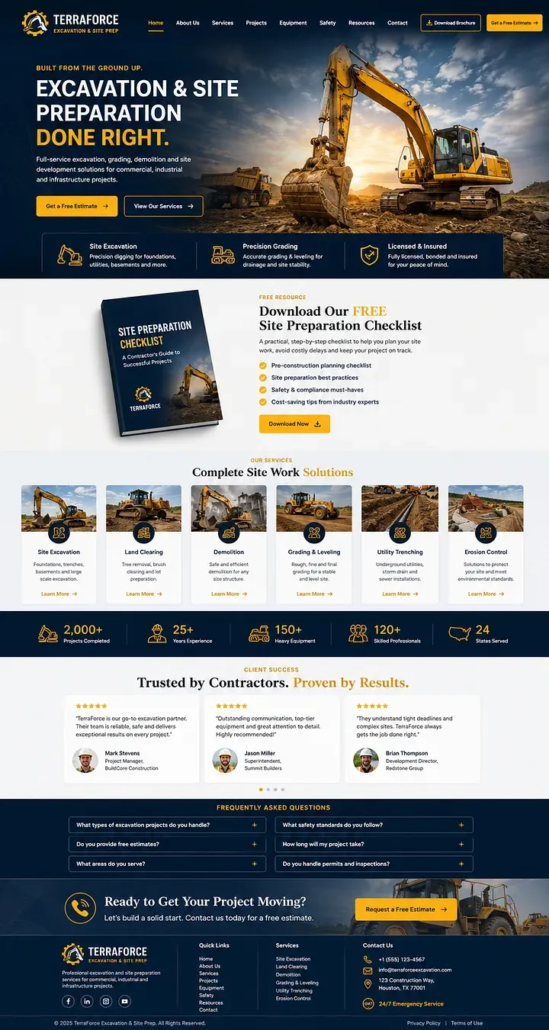
Perfect for: Excavation contractors, grading companies, demolition specialists, land-clearing businesses, and site development contractors.
Why This Website Style Works
Excavation and site preparation projects often involve substantial equipment, complex site conditions, coordination with other contractors, and significant financial commitments.
Potential customers need to understand whether the company has the capabilities and experience required for their specific project.
A strong excavation website combines equipment and project imagery with clearly defined services such as land clearing, grading, trenching, demolition, and site preparation.
The example demonstrates how a bold construction-focused hero, service categories, equipment-related visuals, and prominent estimate requests can communicate capability.
A downloadable site preparation checklist can also serve as a useful resource for prospective customers who are still planning their projects.
What Contractors Can Learn
-
Showcase actual excavation equipment and completed job sites.
-
Explain capabilities for residential, commercial, and industrial projects.
-
Create dedicated pages for grading, land clearing, demolition, trenching, and site preparation.
-
Highlight relevant safety practices, insurance information, and project experience.
-
Provide practical resources that help customers prepare for construction.
Excavation websites should communicate operational capability, reliability, and project readiness—not just the equipment a company owns.
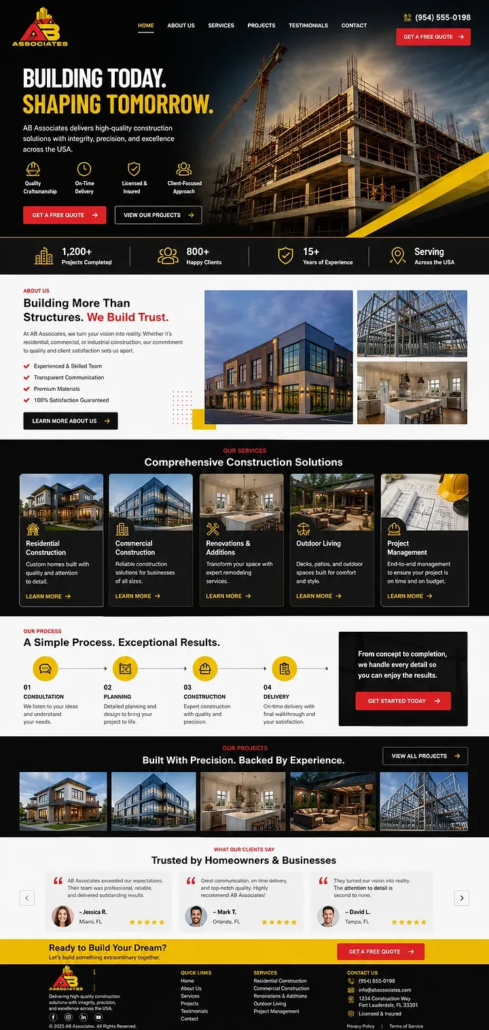
10. General Contractor Website
Perfect for: General contractors, residential builders, commercial construction companies, and multi-service construction businesses.
Why This Website Style Works
General contractors frequently manage multiple services, subcontractors, timelines, and project requirements.
That makes clear website organization especially important.
A potential customer researching a general contractor wants evidence that the company can coordinate work, maintain quality, communicate effectively, and complete projects professionally.
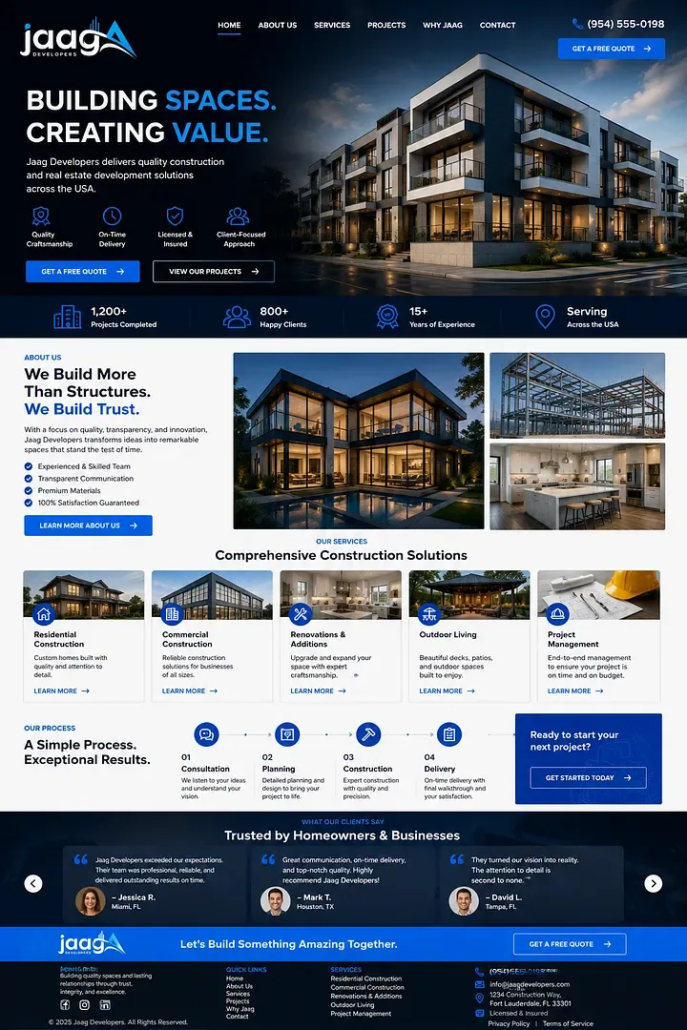
A strong general contractor website brings together project photography, service categories, company experience, testimonials, and a clear explanation of the construction process.
Rather than presenting every service as an unrelated offering, the website should communicate how the contractor manages projects from initial consultation through completion.
What Contractors Can Learn
-
Organize residential, commercial, remodeling, and construction management services logically.
-
Showcase a portfolio with project types, locations, and relevant details.
-
Explain the construction process from planning to delivery.
-
Use testimonials that address communication, reliability, and project experience.
-
Make it easy to request a project consultation or estimate.
For additional visibility, general contractors can connect their website structure with a focused General Contractor SEO strategy, provided the linked guide is live.
The best general contractor websites demonstrate the company’s ability to manage complex projects while making the customer journey feel straightforward.
11. Masonry Contractor Website
Perfect for: Brick masonry contractors, stone masonry specialists, concrete block contractors, chimney contractors, and retaining wall builders.
Why This Website Style Works
Masonry is a craftsmanship-driven industry. Customers want to see the quality of finished brickwork, stone installations, fireplaces, retaining walls, and architectural details.
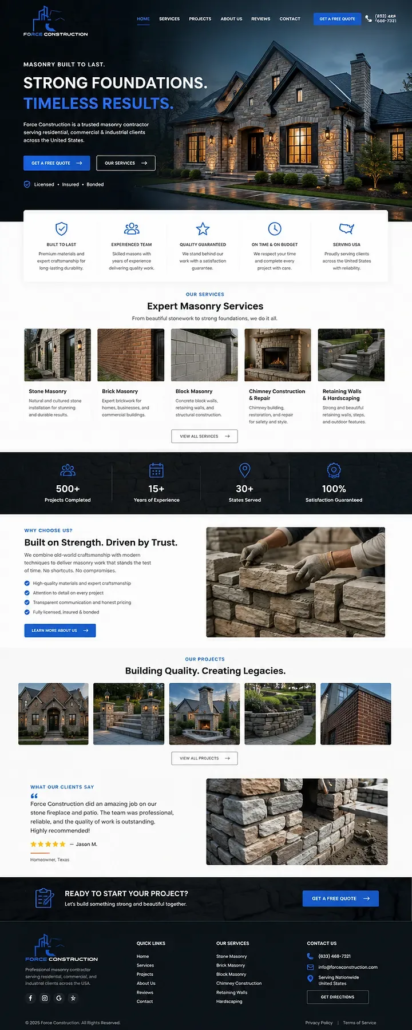
A masonry website should therefore give visual evidence of the contractor’s skills.
The example combines a strong masonry-focused hero image with individual service categories, project galleries, and credibility elements.
This approach allows visitors to evaluate both the aesthetic quality and the practical scope of the company’s work.
What Contractors Can Learn
-
Feature high-quality photographs of completed brick and stone projects.
-
Separate brick masonry, stone masonry, blockwork, chimney services, and retaining walls.
-
Include close-up photographs that demonstrate workmanship and material quality.
-
Explain project suitability for residential and commercial customers.
-
Add testimonials and relevant project descriptions to strengthen credibility.
For masonry contractors, detailed project photography can communicate craftsmanship more effectively than broad marketing claims.
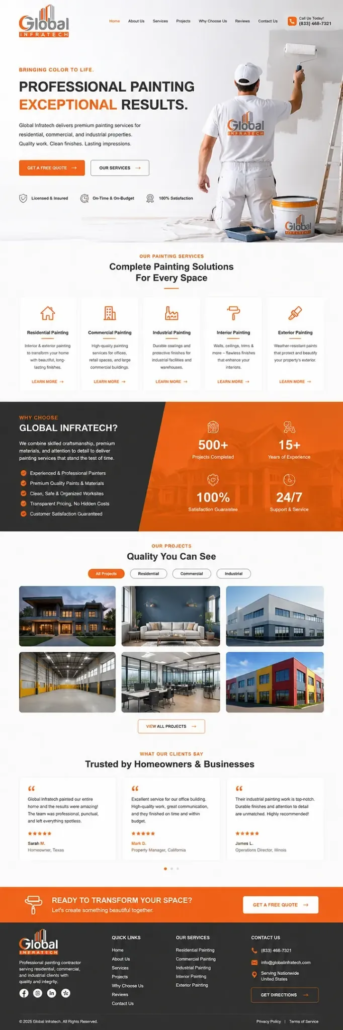
12. Painting Contractor Website
Perfect for: Residential painting companies, commercial painting contractors, interior painters, exterior painters, and industrial coating specialists.
Why This Website Style Works
Painting is highly visual, and customers often judge the expected quality of a contractor’s work through the finished results they can see.
A professional painting website should showcase clean finishes, carefully completed interiors, exterior transformations, and examples relevant to the services offered.
The example uses a bright visual presentation, recognizable painting service categories, and a project gallery to communicate the scope of work.
For homeowners comparing painting estimates, information about preparation, materials, project protection, and cleanup can also help reduce uncertainty.
What Contractors Can Learn
-
Showcase before-and-after painting projects when available.
-
Separate interior, exterior, residential, commercial, and industrial painting services.
-
Explain surface preparation, paint selection, and cleanup procedures.
-
Include authentic customer reviews and finished-project photography.
-
Provide a simple estimate request form with project type and location fields.
Painting websites should help customers visualize the finished result while demonstrating professionalism and attention to detail.
13. Landscaping Contractor Website
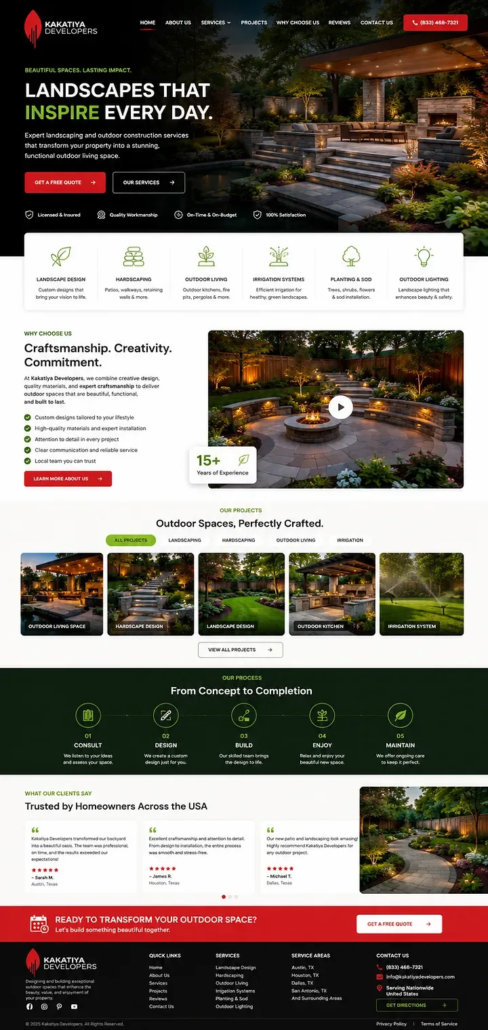
Perfect for: Landscaping companies, hardscaping contractors, outdoor living specialists, landscape designers, and irrigation service providers.
Why This Website Style Works
Landscaping customers are often purchasing a transformation rather than an individual service.
They may be imagining a new patio, outdoor kitchen, garden, walkway, retaining wall, or complete backyard renovation.
An effective landscaping website helps visitors visualize those possibilities through immersive project photography and clearly organized services.
The example uses outdoor living imagery, service categories, and a project gallery to communicate design capability and craftsmanship.
For companies offering design-build landscaping, explaining the process from consultation through installation can make a complex project feel more manageable.
What Contractors Can Learn
-
Lead with compelling photographs of completed outdoor spaces.
-
Organize services into landscaping, hardscaping, outdoor living, irrigation, and lighting.
-
Include project galleries with different budgets, property types, or design styles when appropriate.
-
Explain the consultation, design, installation, and maintenance process.
-
Highlight geographic service areas and seasonal service availability.
Landscaping websites should inspire customers visually while giving them a clear path from inspiration to consultation.
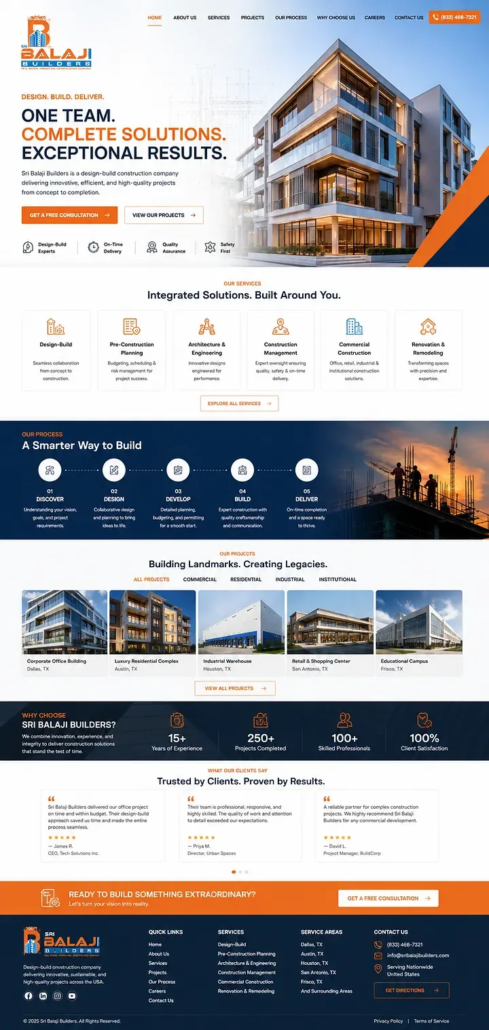
14. Design-Build Contractor Website
Perfect for: Design-build firms, integrated construction companies, architectural construction businesses, and residential or commercial development contractors.
Why This Website Style Works
Design-build companies offer a coordinated approach that brings design and construction responsibilities together.
However, prospective customers may not immediately understand how this differs from hiring separate designers and contractors.
A strong design-build website should communicate the value of an integrated process.
The example combines modern architectural imagery, clearly defined services, project photography, and a step-by-step construction process.
This helps visitors understand how planning, design, budgeting, coordination, and construction fit together.
For commercial clients and high-value residential projects, explaining the process can be just as important as showcasing the finished work.
What Contractors Can Learn
-
Explain what the design-build approach means for the customer.
-
Present the project journey from discovery and planning through design, construction, and completion.
-
Showcase completed projects alongside relevant design and construction details.
-
Highlight team expertise, project coordination, and communication practices.
-
Use consultation-focused calls to action rather than generic contact buttons.
Design-build websites should make the benefits of an integrated construction process easy to understand while demonstrating the company’s capabilities.
15. Real Estate Development Website
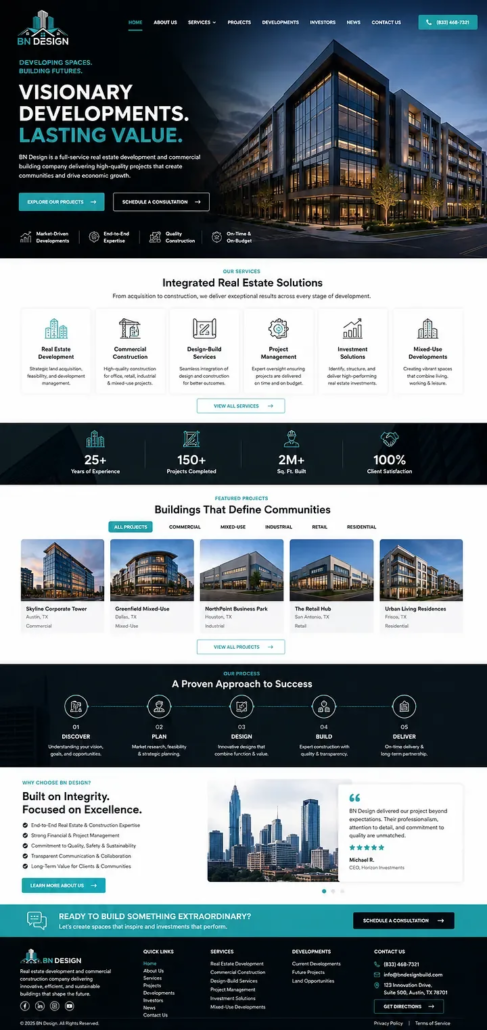
Perfect for: Real estate developers, commercial property developers, mixed-use development companies, residential development firms, and construction-focused investment businesses.
Why This Website Style Works
Real estate development websites often serve several audiences, including investors, property owners, commercial tenants, business partners, and potential development clients.
Each audience may be looking for different information.
An investor might want to understand development experience and project opportunities. A property owner may be evaluating the company’s capabilities. A commercial tenant may be interested in available developments and property details.
A well-organized real estate development website makes these paths easier to navigate.
The example uses architectural photography, development categories, project portfolios, and process-focused content to communicate a professional, investment-oriented brand.
Its presentation emphasizes long-term value, development expertise, and completed projects rather than relying entirely on promotional language.
What Contractors Can Learn
-
Organize projects by commercial, residential, industrial, retail, or mixed-use categories.
-
Showcase developments with locations, project descriptions, and relevant specifications.
-
Explain development capabilities, including acquisition, planning, construction, and project management where applicable.
-
Create clear navigation paths for investors, partners, property owners, and prospective clients.
-
Use professional architectural photography and consistent branding to communicate credibility.
Real estate development websites should balance strong visual presentation with clear project information, business credibility, and audience-specific navigation.
These 15 contractor website examples demonstrate that effective website design is not about following one visual trend. A roofing company, luxury home builder, excavation contractor, and real estate developer serve different audiences with different expectations. What matters is how clearly each website communicates its services, demonstrates credibility, and guides prospective customers toward the next step.
What the Best U.S. Contractor Websites Have in Common
Professional Branding
Top construction companies across the United States consistently use:
- Professional logo
- Consistent brand colors
- Clean typography
- High-quality project photography
- Modern layouts
Your website is only one part of a contractor’s brand. For a complete approach to building a trusted identity, explore our U.S. construction branding guide for contractors.
Conversion-Focused Design
Successful contractor websites include:
- Free Estimate buttons
- Request a Quote forms
- Sticky navigation
- Click-to-call buttons
- Mobile optimization
For a deeper look at conversion-focused pages, see our high-converting contractor landing page guide.
Local SEO for U.S. Contractors
One thing the best contractor websites do exceptionally well is local SEO.
Examples include:
- City-specific landing pages
- Google Business Profile integration
- Location-based keywords
- Local testimonials
- Service area maps
- Schema markup
This helps contractors appear when people search for:
- Roofing contractor near me
- General contractor in Dallas
- Home builder in Florida
- Commercial construction company in Chicago
For a complete optimization process, see our construction Local SEO checklist for U.S. contractors.
Already Have a Contractor Website but Need More Local Visibility?
A professional website is only part of the system. Your service pages, location targeting, Google Business Profile, on-page SEO, and local search signals also influence whether potential customers can find your business.
I help U.S. contractors improve their search presence with practical SEO and Google Business Profile optimization.
Common Website Mistakes U.S. Contractors Make
Many construction businesses lose potential clients because their websites:
- Look outdated
- Load slowly
- Lack trust signals
- Have poor mobile performance
- Don’t showcase completed projects
- Have confusing navigation
- Don’t explain services clearly
- Don’t rank well in Google
If you’re experiencing these problems, read Why Most U.S. Contractor Websites Fail to Generate Leads for practical fixes.
Website Checklist for United States Construction Companies
Before launching or redesigning your website, make sure it includes:
- Professional branding
- Mobile-friendly design
- High-quality project gallery
- Customer testimonials
- Clear Request a Quote button
- Fast loading speed
- Service area pages
- Local SEO optimization
- Trust badges and certifications
- Contact information on every page
The best United States contractor websites do more than look impressive — they establish credibility, showcase expertise, and convert visitors into qualified leads.
Whether you’re a general contractor, roofing company, remodeling contractor, custom home builder, or commercial construction business, investing in a professional website can help you stand out in a competitive market and win more projects.
30-Minute Website Improvement Plan
10 Minutes
- Refresh your homepage headline.
- Highlight your primary services.
10 Minutes
- Add recent project photos.
- Feature customer testimonials.
10 Minutes
- Make your “Request a Quote” button more prominent.
- Test the website on a mobile device.
For U.S. construction businesses, a well-planned Contractor SEO strategy helps improve Google rankings, increase visibility in local searches, attract homeowners actively looking for construction services, and generate more qualified leads and estimate requests.
What We Look for When Reviewing Contractor Websites
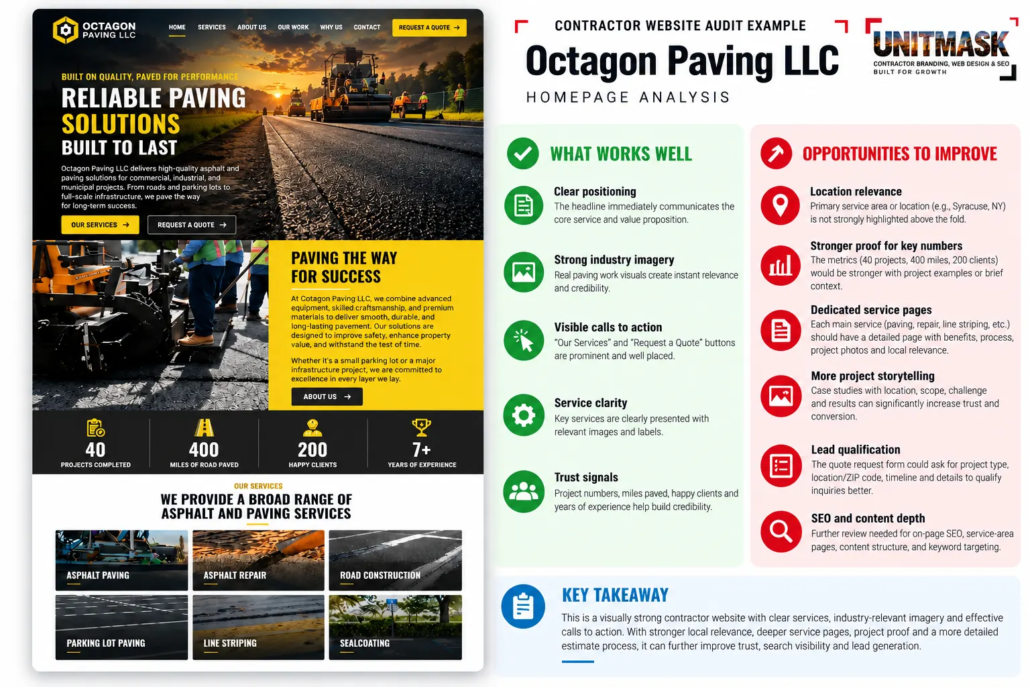
We ask a more important question:
Can a potential customer quickly understand the company, trust it, find the right service, and take the next step?
Take this paving contractor homepage as an example.
At first glance, several fundamentals are strong. The website immediately communicates the service through the headline “Reliable Paving Solutions Built to Last,” uses relevant project imagery instead of generic corporate visuals, and places Request a Quote and Our Services calls to action prominently near the top.
The homepage also creates a logical customer journey:
Service → credibility → capabilities → estimate → reputation → contact.
That is a much stronger foundation than a contractor website that simply lists company information.
But a visual review also reveals opportunities we would investigate further during a Unitmask website audit.
1. Location relevance could be clearer above the fold.
The homepage communicates paving immediately, but the visible hero doesn’t strongly establish the primary market or service area. For a local contractor, adding location context can help visitors confirm within seconds that the company serves them.
2. Strong numbers need supporting proof.
Metrics such as “400 Miles of Road Paved” and “200 Happy Clients” can build trust—but only when they are accurate and defensible. Wherever possible, strong claims should connect to real projects, case studies, or other evidence.
3. Service cards create a good starting point, but dedicated service pages matter.
Asphalt paving, asphalt repair, road construction, parking lot paving, line striping, and sealcoating represent different customer needs and potentially different searches. Each major service should lead to a useful page rather than relying on one general services page.
4. The project work deserves more storytelling.
Construction photography is valuable proof. It becomes substantially stronger when visitors can see the project location, scope, challenge, work completed, and result—not just an image gallery.
5. The estimate path could qualify leads better.
Instead of collecting only basic contact information, a contractor can potentially ask for project type, location or ZIP code, timeline, and project details. That can help the business understand the inquiry before the first conversation.
The Unitmask Audit Principle
A contractor website doesn’t need more design simply for the sake of design.
It needs fewer points of uncertainty between:
“I found this contractor” → “They do what I need” → “They serve my area” → “I trust them” → “I want an estimate.”
That is what we look for when reviewing contractor websites.
Construction Website Design FAQs
What should a contractor website include?
A contractor website should clearly explain services, service areas, project experience, trust credentials, reviews and the next step for requesting an estimate or consultation. Strong contractor websites also use dedicated service pages and real project photography rather than relying entirely on a generic homepage.
How many pages should a contractor website have?
There is no ideal number for every contractor. A small specialized contractor may need only a focused set of pages, while a multi-service or multi-location company may need separate pages for major services and markets. The site structure should reflect what customers actually search for and what the business needs to explain.
Are project photos important for contractor websites?
Yes. Project photography gives potential customers evidence of the type and quality of work a contractor performs. Whenever possible, organize projects by service or project type and add useful context rather than publishing an unexplained image gallery.
Should contractors create separate service pages?
Usually, yes. Important services deserve dedicated pages when customers search for them independently. This also gives the contractor more space to explain the service, answer questions, show relevant work and create a focused conversion path.
Does a contractor website help with local SEO?
It can. Service pages, location relevance, consistent business information, internal linking, useful content and alignment with the company’s Google Business Profile can all support local search visibility.
Continue Reading: U.S. Contractor Website & Marketing Guides
Are you a contractor, builder, or home service business owner?
What did you pay for your website—and looking back, was it worth the investment?If you’re currently comparing website quotes, you can also share what you’re being quoted and what’s included. Your experience may help other contractors make a better decision.
Comments are welcome from contractors, builders, construction professionals, and business owners. Please keep the discussion relevant and avoid promotional links or spam.
 Unitmask.cloud
Leave a Reply
Want to join the discussion?Feel free to contribute!